Strengthening Project Cost Visibility Through BIM Coordination
Every construction project has numbers attached to it — budgets, quotes, change orders, progress payments, and schedules. Yet even seasoned teams get blindsided by cost surprises. You think you’re on track, and then a scope gap shows up, a design change adds a thousand dollars, or a subcontractor flags a conflicting detail.
What separates predictable projects from chaotic ones isn’t luck. It’s clarity — especially cost clarity rooted in measurable data. When teams can see quantities, sequences, and risks early, cost decisions become informed rather than reactive. That’s where careful modeling and integrated estimating make their biggest impact.
How BIM coordination deepens understanding
When a project starts with a set of drawings, interpretation begins immediately. One person assumes “typical” means one thing. Another person assumes something else. Then the estimator measures manually and tries to reconcile the two interpretations.
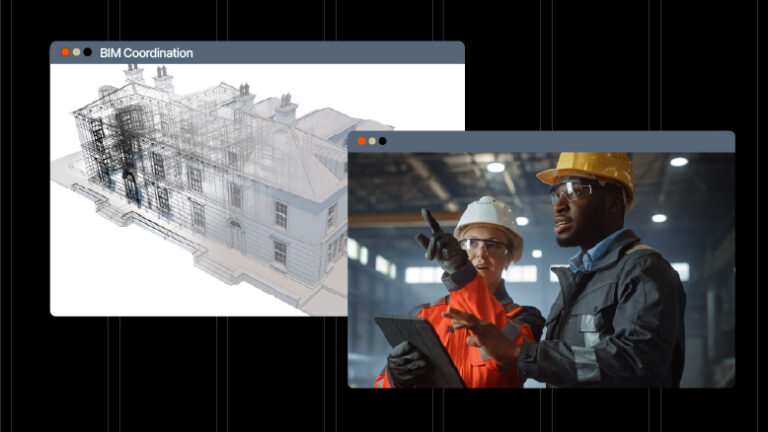
By contrast, a model built for use — not just for visuals — removes ambiguity. With BIM Modeling Services, what was once lines on paper becomes measurable data. Walls have an area. Pipes have length. Systems have relationships. Quantities emerge from something you can query, not guess.
A coordinated model:
- Shows clashes between trades before they show up in pricing
- Reveals spatial conflicts that would otherwise require redesign
- Organizes components by trade so quantities align with work scopes
- Supports the extraction of real counts instead of approximations
When model data becomes the basis for cost discussion, misunderstandings fade, and budgets sharpen.
Turning model quantities into actionable estimates
Extracting quantities is only part of the challenge. Several square feet or linear feet doesn’t answer questions about labor productivity, regional pricing, or site constraints. That’s where Construction Estimating Services adds essential judgment.
Estimators working with model outputs do more than tally up numbers. They apply:
- Realistic labor rates based on local conditions
- Productivity assumptions for tight access or unusual geometry
- Phasing and sequencing logic that reflects actual build conditions
- Pricing adjustments for material availability and market shifts
When model quantities and estimating expertise align, budgets begin to reflect the true cost of execution, not just a rough count.
Where structured cost platforms add discipline
Some projects — especially those involving third-party reviews, owner approvals, or insurance scopes — benefit from an additional layer of structure. This is where Xactimate Estimating Services comes into play.
Xactimate brings discipline and standardization to cost plans by:
- Organizing costs into widely recognized line items
- Applying regional price libraries that reflect actual markets
- Separating labor, materials, and equipment in a way that reviewers understand
- Documenting assumptions cleanly for audit and review
When quantities from a BIM model feed into Xactimate, the estimate gains clarity. Stakeholders can trace every line back to a measurable element. That transparency speeds approvals and reduces negotiation time.
A simple, repeatable process that works
Cost visibility improves not because of a single tool, but because of a simple, repeatable workflow that connects design, modeling, and pricing.
Try this practical sequence:
- Agree on standards at kickoff — naming conventions, required metadata, export formats.
- Build the model with purpose — incorporate trade-level detail with consistent attributes.
- Map quantities to cost items — link model labels to pricing codes in a shared reference.
- Price quantities — use Construction Estimating Services to apply local rates and judgment.
- Structure outputs — use Xactimate estimating where formal documentation is beneficial.
- Review before commitment — reconcile numbers with procurement and field teams before issuing orders.
Run this workflow at major design milestones. That way, the estimate always reflects the current scope and design intent, not outdated documents.
The small changes that make a big difference
Most teams don’t need huge investments to improve visibility. They need discipline.
Practical habits include:
- Publishing a concise modeling guide for team use
- Enforcing consistent naming across disciplines
- Version–controlling the mapping spreadsheet so changes are tracked
- Running sample exports early to catch unit or data issues
These efforts keep the data flowing cleanly from the model to the estimate — and that flow is what reveals cost risks early.
What teams notice first
The improvements you see aren’t flashy. They’re operational — but no less powerful for it.
Typical early wins:
- Fewer change orders caused by miscounted quantities
- Faster procurement, because orders match modeled quantities
- Clearer communication across design, estimating, and field teams
- Reduced rework because clashes are resolved before pricing
These outcomes protect margins and reduce stress in weekly standups.
People still matter — even with great data
Models and estimating platforms don’t replace people. What they do is give people better information to use.
Construction estimating brings real-world judgment. They adjust for local labor norms and site conditions. BIM coordinators keep the data honest. Project managers sequence work logically. And when structured cost reporting is required, Xactimate Estimating Services makes the numbers themselves something everyone can understand.
Together, these elements let teams make decisions rather than guess at them.
Where visibility improves long-term performance
Building cost visibility isn’t just beneficial for one project. It builds organizational muscle. Over time, teams refine:
- Internal cost benchmarks
- Forecasting accuracy
- Risk tolerance and allowance practices
- Communication rhythms across departments
This institutional knowledge becomes an asset that shows up in tighter bids, smoother deliveries, and higher client satisfaction.
Closing thought: clarity built in, not bolted on
Tight budgets emerge not from luck, but from clarity. When design, quantities, and pricing are connected early and kept in sync, teams are no longer chasing numbers. They’re using them.
BIM Modeling Services deliver measurable data.
Construction Estimating Services add experience and judgment.
Xactimate Estimating Services provide structure where stakeholders need it.
Follow a simple, repeatable workflow, and you’ll build cost visibility into every phase — from early concept to final procurement.
FAQs
1. How early should estimating be involved in BIM coordination?
Estimators should engage once the model has stable geometry and naming conventions. Early involvement helps shape the model for extractable, priceable quantities.
2. Do all projects require Xactimate outputs?
No. Use Xactimate Estimating Services when formal, structured reporting is needed for audits, owner reviews, or multi-party contracts. For many projects, model-driven estimates plus a clean mapping approach will suffice.
3. What’s the first step teams should take to improve cost visibility?
Agree on a short modeling standard and a shared mapping spreadsheet at kickoff. Run a test export early to catch naming or unit issues before they affect estimates.